Yoga is a centuries‑old practice known for enhancing flexibility, strength, and mental clarity. In recent years, yoga has gained immense popularity as a holistic fitness routine that not only relaxes the mind but also chisel‑tones the body. If your goal is muscle toning, fat reduction, and improved posture, incorporating the most powerful yoga poses into your regular practice can accelerate visible results. This article explores 11 highly effective yoga asanas for toning different muscle groups, along with precise guidance to help you practice them with intention and safety.
1. Warrior II (Virabhadrasana II)
Warrior II is a foundational standing pose that strengthens the legs, opens the hips, and tones the core and arms. To perform this pose, stand with your feet wide apart, turn the front foot outward and the back foot slightly inward. Bend your front knee while extending both arms at shoulder height. Hold this posture for 30 to 60 seconds on each side.
Warrior II improves stamina and balance, and its sustained muscle engagement makes it one of the most efficient poses for lower‑body toning.
2. Chair Pose (Utkatasana)
Chair Pose is an intense squat‑like posture that targets the quadriceps, glutes, hamstrings, and core. Begin standing with feet hip‑distance apart. Inhale and lift your arms overhead, then exhale as you bend your knees and lower your hips as if sitting in an invisible chair. Keep your chest lifted and spine long.
This asana improves lower‑body strength and promotes better alignment, essential for sculpting firm legs and a stable core.
3. Plank Pose (Phalakasana)
Plank Pose is a straightforward yet powerful posture for developing core strength and total‑body toning. Begin in a push‑up position with hands under shoulders and body forming a straight line from head to heels. Engage the abdominal muscles and hold.
Plank strengthens the shoulders, arms, back, and core. Variations like side plank can further enhance oblique engagement and overall stability.
4. Boat Pose (Navasana)
Boat Pose specifically targets the core muscles, particularly the lower abdomen and hip flexors. Sit with knees bent and feet flat. Lean back slightly, lift your feet off the floor, and straighten your legs as much as possible while maintaining a tall spine. Extend your arms forward. Hold this posture for 30 to 60 seconds.
Navasana is a dynamic pose that builds deep core strength and improves balance, contributing to a flatter stomach and toned midsection.
5. Bridge Pose (Setu Bandhasana)
Bridge Pose engages the glutes, hamstrings, lower back, and core, making it a valuable addition to any toning routine. Lie on your back with knees bent and feet flat on the floor. Press into the heels and lift your hips toward the ceiling while keeping your shoulders grounded.
This backbend strengthens the posterior chain and can help alleviate lower‑back discomfort while improving overall hip stability.
6. Downward Facing Dog (Adho Mukha Svanasana)
Downward Facing Dog is a full‑body strengthening pose that engages the arms, shoulders, core, and legs. Begin on hands and knees, lift your hips upward and backward to form an inverted V‑shape. Press evenly through your hands and feet.
This foundational yoga posture improves upper‑body strength, lengthens the spine, and promotes better alignment throughout the body. Repeating this pose regularly can enhance muscle tone and endurance.
7. High Lunge (Utthita Ashwa Sanchalanasana)
High Lunge is a dynamic standing pose that works the legs, glutes, core, and shoulders. From a standing position, step one foot back and bend the front knee while keeping the back leg straight and active. Lift your arms overhead and gaze forward.
High Lunge increases strength, balance, and stability. It also boosts hip flexibility and helps build strong, defined legs.
8. Side Plank (Vasisthasana)
Side Plank is an advanced variation of plank that intensifies oblique engagement and builds strong arms and shoulders. From a traditional plank, shift your weight onto one hand and the outer edge of that foot. Stack your feet and extend the opposite arm upward.
This pose improves core strength, especially along the sides of the torso, and enhances overall body coordination. Beginners can modify by dropping the lower knee.
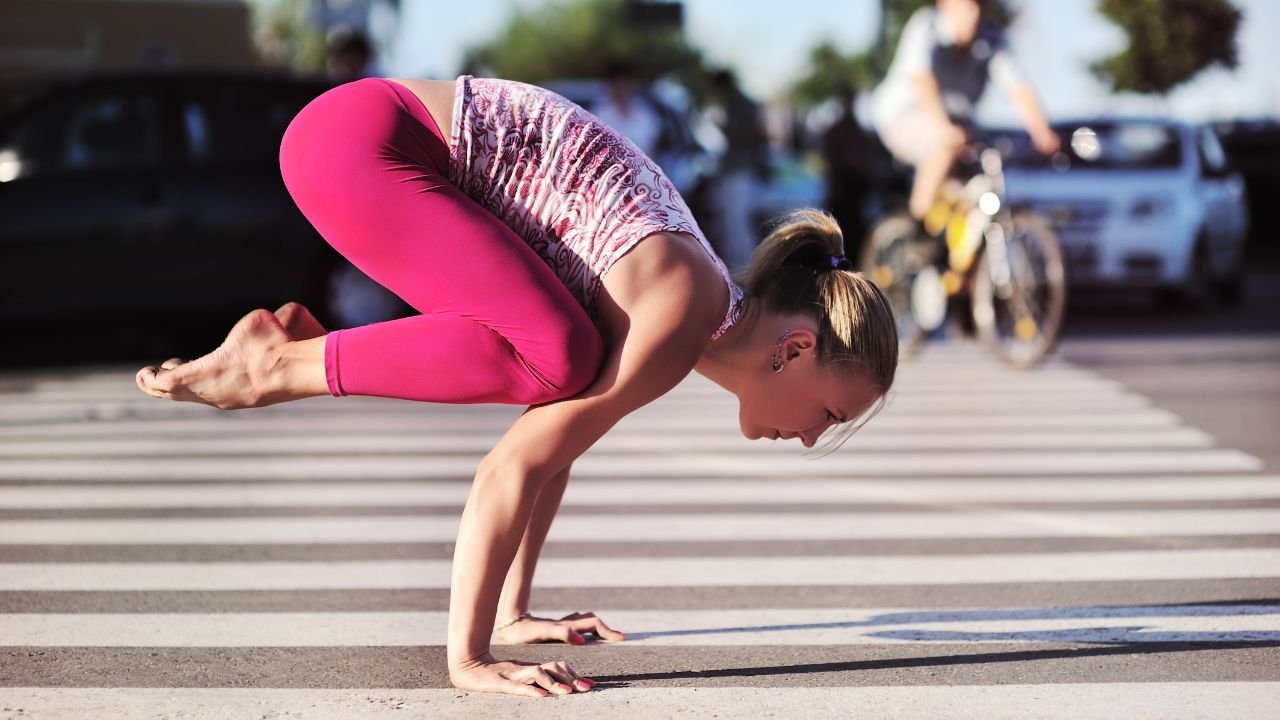
9. Crow Pose (Bakasana)
Crow Pose is an arm‑balancing posture that enhances core strength, wrist stability, and upper‑body engagement. Begin in a squat with knees wide and hands placed shoulder‑distance apart. Lean forward, lift your feet off the floor, and balance on your hands with knees resting on your upper arms.
Crow Pose challenges balance and focus while strengthening the arms, shoulders, and core. Practicing this pose regularly leads to improved muscular control and toning.
10. Triangle Pose (Trikonasana)
Triangle Pose is a standing posture that stretches the sides of the torso, tones the legs, and strengthens the core and back muscles. Stand with feet wide apart, extend arms at shoulder height, and reach forward with one arm while hinging at the hip. Lower the hand to your shin or the floor and reach the opposite arm toward the sky.
Trikonasana improves spinal alignment and builds endurance in the legs and core. Its lateral stretch increases flexibility while promoting lean muscle definition.
11. Camel Pose (Ustrasana)
Camel Pose is a backbend that opens the chest, strengthens the back, and engages the core and glutes. Begin kneeling with knees hip‑distance apart. Place your hands on your lower back for support, press your hips forward, and lift your chest upward. Optionally reach your hands toward your heels.
Camel Pose enhances posture and flexibility while challenging the deep muscles of the torso. Regular practice contributes to improved spinal strength and upper‑body toning.
Best Practices for a Toning Yoga Routine
To maximize toning benefits, aim to practice these asanas 3–5 times a week for at least 30 minutes per session. Warm up with Sun Salutations to prepare your muscles, and focus on controlled breathing and proper alignment rather than speed or intensity alone.
Pair your yoga routine with a balanced diet, adequate hydration, and sufficient rest. A regimen that includes both dynamic and static holds (like Plank and Warrior II) effectively targets different muscle fibers and supports long‑term toning.
Safety and Modifications
Always listen to your body and avoid pushing into pain or discomfort. For beginners, use props like blocks or straps to maintain correct posture, and consider starting with shorter holds gradually increasing duration as strength develops. If you have chronic injuries or medical conditions, consult a certified yoga instructor or healthcare provider before beginning a new practice.
Conclusion
Incorporating these 11 powerful yoga poses into your fitness routine can greatly enhance your muscle tone, flexibility, and metabolic health. Each asana targets specific areas of the body, ensuring a comprehensive approach to shaping and strengthening from head to toe. With consistent practice and mindful alignment, yoga can be an effective tool for sculpting a healthier, toned body.